I- PICKLING
Pickling is the process of preserving edible products in an acid solution, usually vinegar, or in salt solution (brine). In the latter case, the acid that does the preservative action (lactic acid mainly) is produced by fermentation. The process of pickling is also known as brining and the resulting foods as pickles.
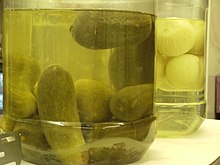
Pickling imparts unique characteristics to fruits and vegetables. Desirable changes in flavor, texture, and color take place in fermented, pasteurized, and refrigerated pickles, and are carefully monitored. However, some of the same bacteria involved in normal fermentation, such as the lactic-acid-formers, may cause spoilage if not destroyed. Selected pickling problems which may affect sensory quality
II- SANITATION
Proper sanitation is important not only from the general health point of view but it has a vital role to play in our individual and social life too. Sanitation is one of the basic determinants of quality of life and human development index. Good sanitary practices prevent contamination of water and soil and thereby prevent diseases. The concept of sanitation was, therefore, expanded to include personal hygiene, home sanitation, safe water, garbage disposal, excreta disposal and waste water disposal.
III-PERSONAL HYGIENE AND SANITARY FOOD HANDLING
Utensils, equipment and food contact surfaces must be kept in a clean and sanitary condition.
Food businesses must ensure eating and drinking utensils and food contact surfaces of equipment:
-are clean
-have had heat and/or chemicals, or other processes applied to them so that the number of microorganisms on the surface or utensil is reduced to a level that does not:
compromise the safety of the food with which it may come into contact
permit the transmission of infectious disease.
Meeting relevant legislation requirements for cleaning and maintenance is not only important for compliance reasons; it is also beneficial for the success of a food business.
Consumers are now increasingly aware of the requirements of food businesses and the processes needed to produce safe and suitable food.
Not only will consumers question poor food handling and hygiene practices, they are also more likely to return to clean, well maintained premises
IV- Cleaning compound
Cleaners are compounded specifically for performing certain jobs such as for washing floors and walls, use in a high-pressure washer, cleaning-in-place (CIP), and other purposes. Good cleaners must be economical, nontoxic, noncorrosive, non-caking, non-dusting, easy to measure or meter, stable during storage, and easily and completely dissolved. Cleaning compound requirements vary according to the area and equipment to be cleaned. The selection of compounds for blending, to form a satisfactory cleaner, requires specialized and technical knowledge. Major considerations in cleaning compound selection are the nature of the soil to be cleaned, water characteristics, application method, and area and kind of equipment to be cleaned.
The major function of cleaning compounds is to lower the surface tension of water so that soils may be loosened and flushed away. Detergent auxiliaries are included in cleaning compounds to protect sensitive surfaces or to improve the cleaning properties. Knowledge of how to handle cleaning compounds is essential to reduce the potential for injury of employees. If a worker is accidentally splashed with a cleaning compound, the affected area must be flushed with a large amount of water immediately.
Chapter VI – Sanitation Equipment
sanitization is the process of cleaning a specific area or surface so that it is bacteria-free and elementally clean for all sorts of microorganisms. The main goal of sanitizing in the food sector is to lower the rate of germs. In sanitation, physically or nutritionally eradicating microbial and cleaning microorganisms during cleaning may be sufficient to control microbial and cleaning microorganisms. In most cases, sanitizing chemicals and heat are used. In fact, sanitization can be done by hand or by machine.
Chapter VII – Waste Product Handling
Proper handling of waste product is important to avoid contamination most especially when the waste is hazard and in need for proper disposal. Individual should exercise waste avoidance. They can recycle old items, repair broken items, donating items that are not being used.

 mylenedazblog